Why introduce the topic of migration in the school and in the classroom?
It is important to recognise that the complex, diverse, and often fraught history of Britain’s engagement with other nations, races, and cultures happened both within its shores and beyond. It is not an addendum to British history, literature, and culture, but an intrinsic part of it. (Runnymede, Teaching Migration, Belonging and Empire in Secondary Schools, viewed 8 April, 2026)
The movement of people across the world is integral to many areas of both the primary and secondary curriculum. Learning about migration enriches students' knowledge of multi-racial Britain and builds empathy for and understanding of child migrants, many of whom are in our schools. It celebrates diversity, highlights inequalities and builds analytical skills, encouraging learners to 'unpack' mixed media and its influence in shaping their values and attitudes. Advances in technology and the rise of social media mean that it is more important than ever for young people to think critically.
A study of migration can harness young people's involvement in and enthusiasm for active citizenship and social justice issues. Many young people want to know more about their world and how they can take action to make it a better place. It can raise self-esteem and build the capacity of young people to manage challenges and conflicts that arise in their own lives, whether this be in the playground, at home, or in their local community. To ignore controversial issues is to ignore the realities in many young people’s lives.
A study of migration can help create a more inclusive school, that reflects the diversity of British society, where everyone's experiences are validated, underpinning its values of respect of others, kindness and welcome.
Why use Child Migrant Stories and related resources in the study of migration?
The strength of these stories based on lived experience of children arriving in the UK in the teaching of migration across a range of curriculum areas is because the focus is on personal stories helping students develop their understanding of, and empathy for, children and young people who leave their homes:
“The workshop helps them see the ‘refugee’ as a person with a story and not a number, statistic or news story.” (Year 6 teacher)
Those featured are children and young people rather than adults when they arrived in the UK, enabling students to explore commonalities and differences with their own lives:
“We’re happily living our lives with our play stations and mobile phones. I’ve got everything handed to me on a plate, but not everyone has that.” (Student, aged 11)
The films show child migrants, who make up almost half of the people displaced worldwide, as resilient. Alongside childhood depictions of war or racism, there are instances of humour, everyday life and youth activism. countering stereotypes and representing migration as multidimensional, rather than as a "problem" or a "crisis”.
“The focus on personal stories... provides an understanding of the refugee as a brave and resilient person as opposed to the helplessness with which refugees are often associated.” (Programme evaluator or Child Migrant Stories school sessions)
The historical dimension of the stories e.g. from 1930s - present day helps depoliticise the topic and gives students analytical frameworks with which to approach more contentious contemporary issue.
The films, co-produced with child migrants, are visually and musically engaging for all students. They have the potential to enhance a sense of identity and self-esteem of students with a background of migration.
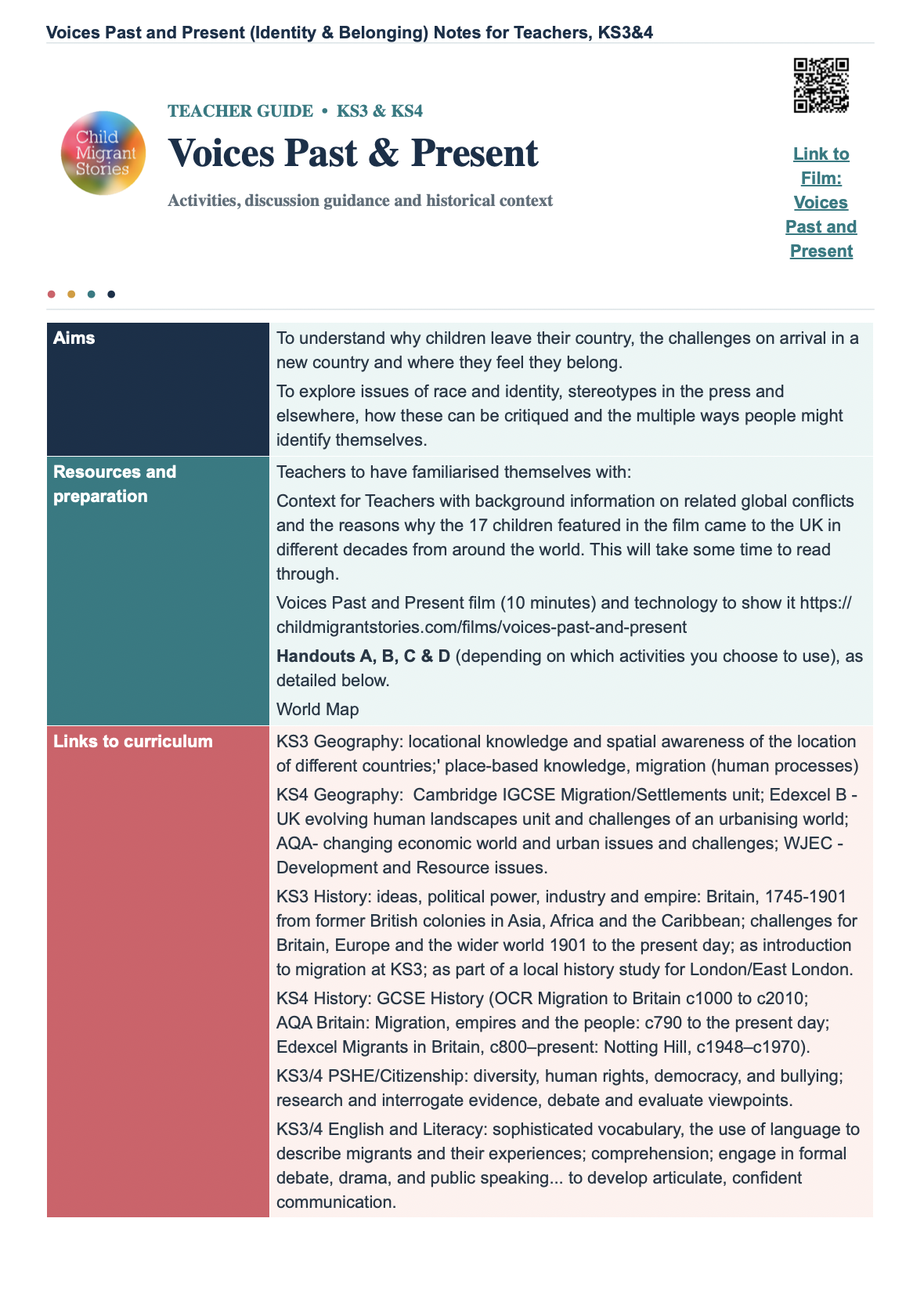
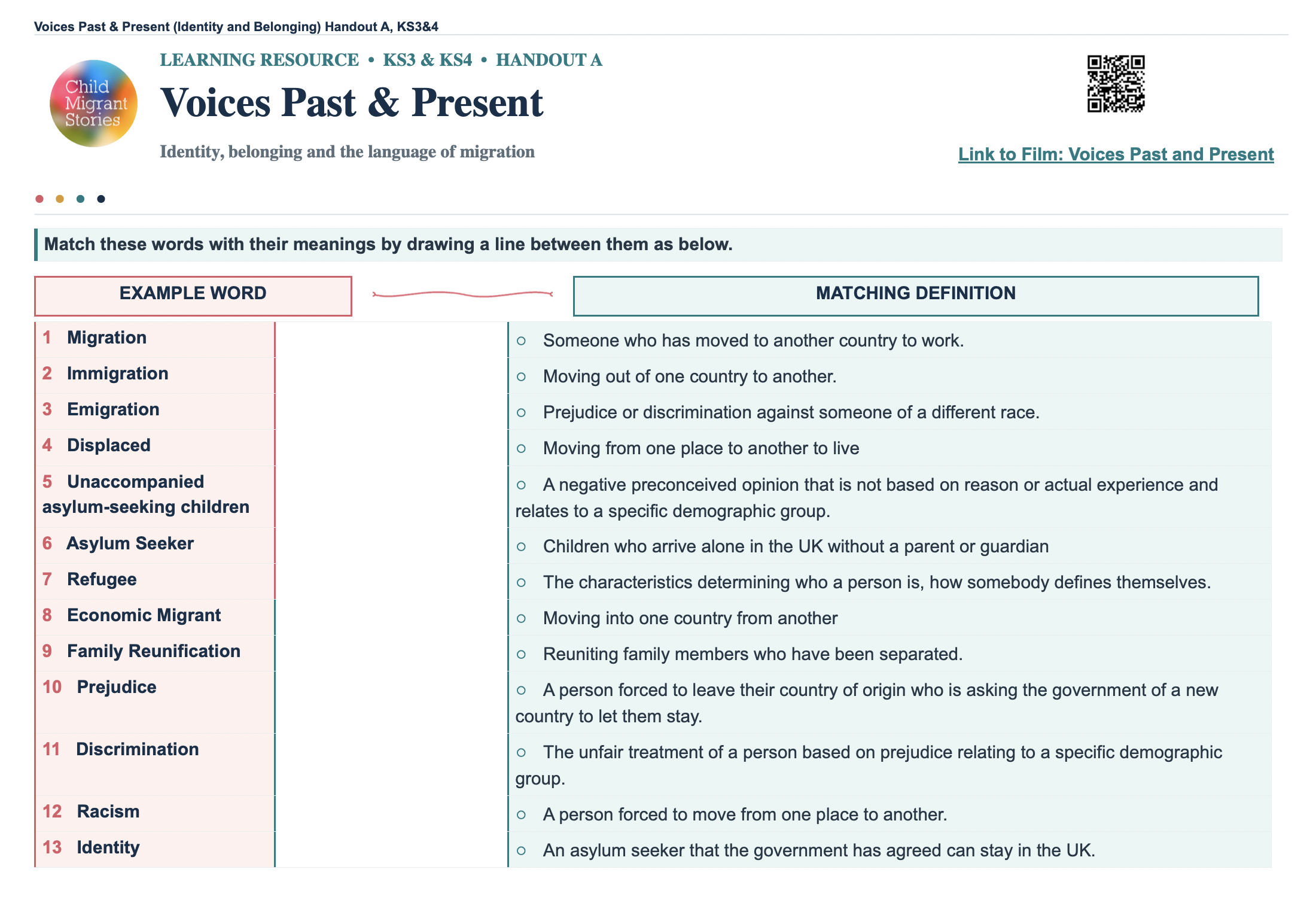
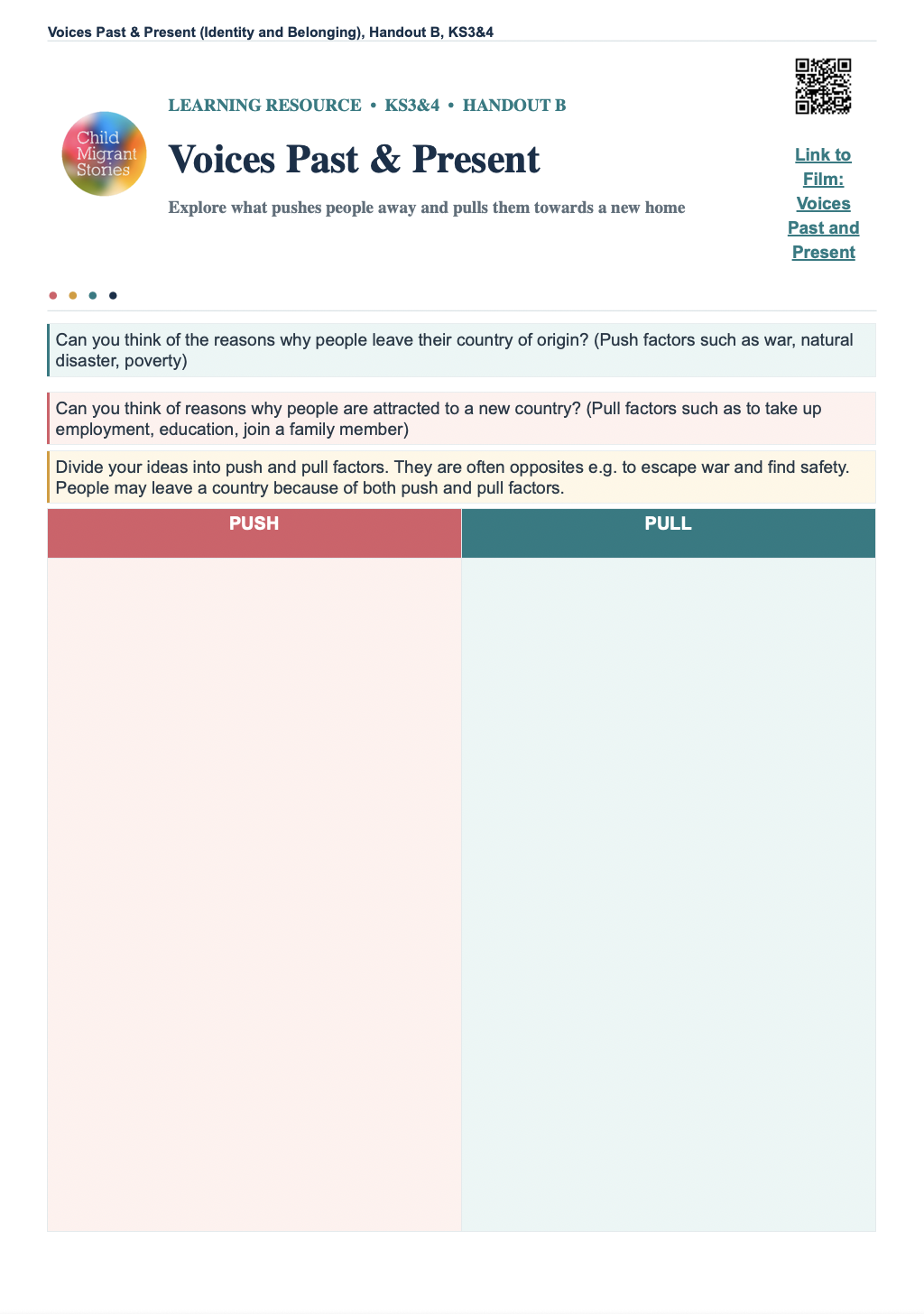
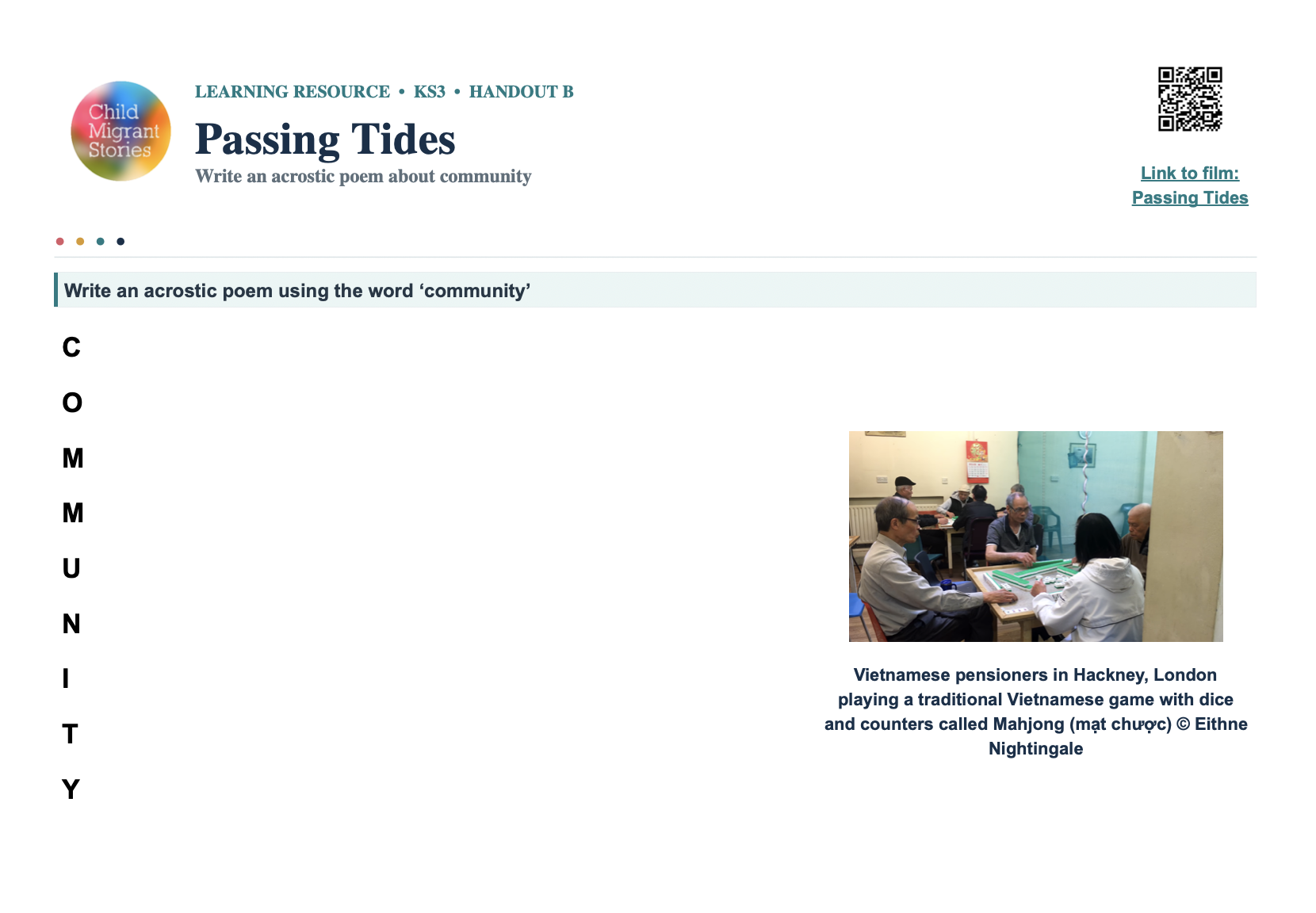
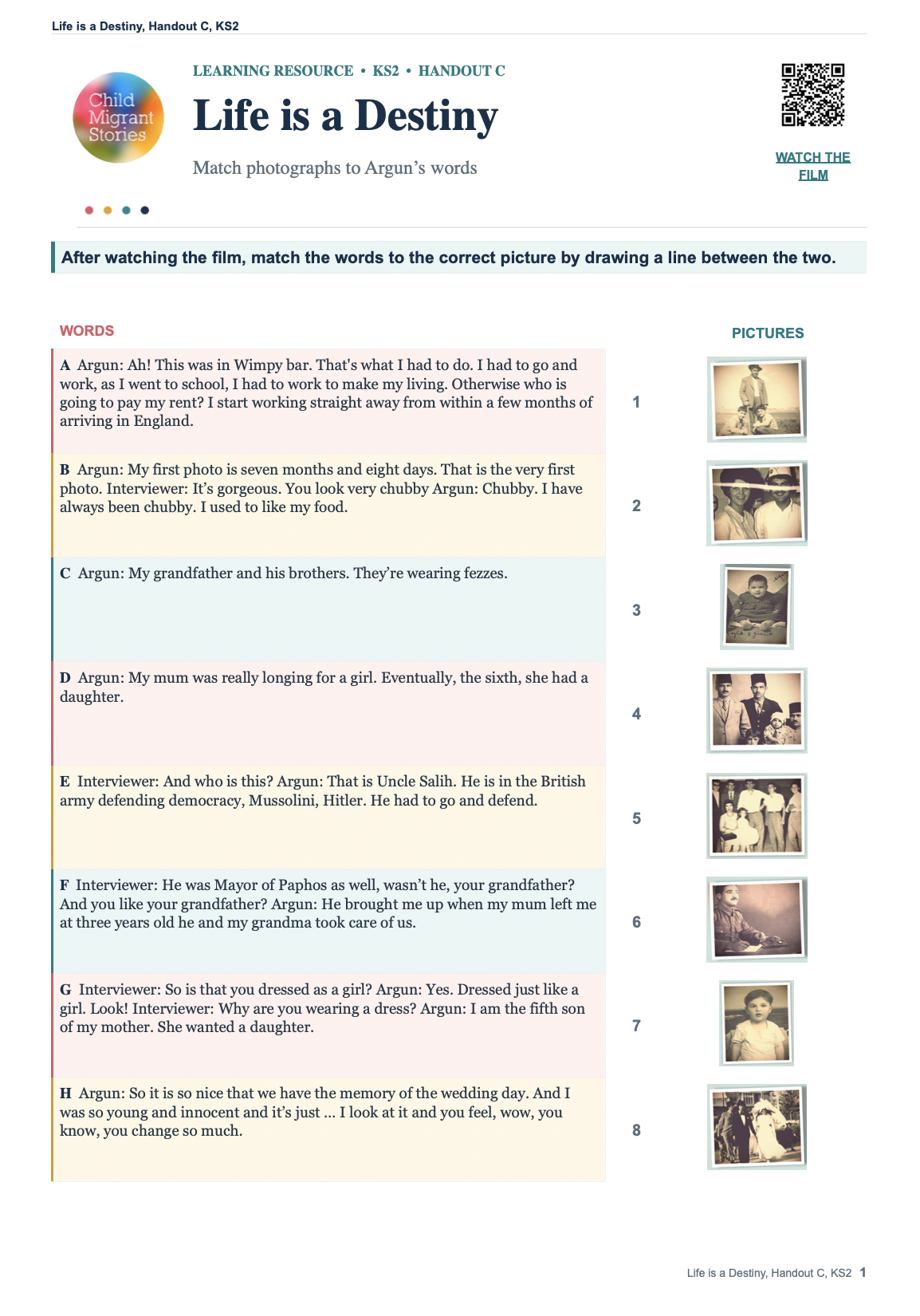
Explore the gallery below to see a preview of some of the resources and teacher notes: